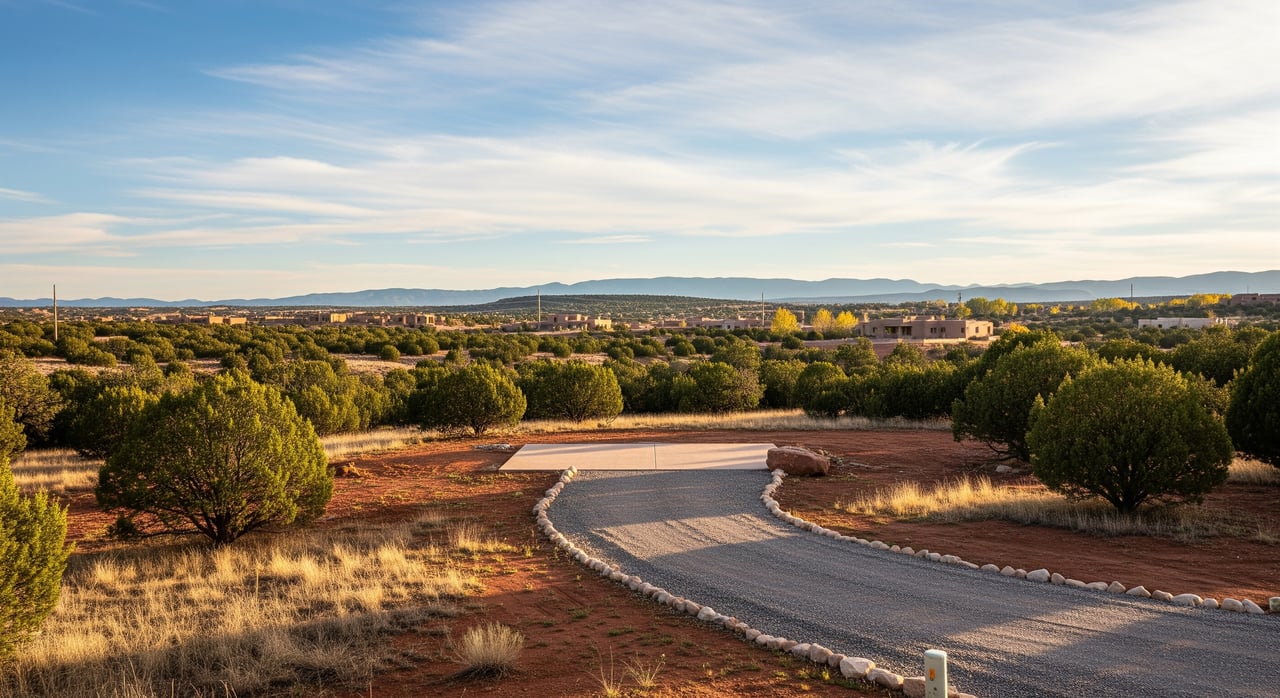
Buying Land in Tesuque: Zoning, Utilities & Access Guide
January 1, 2026
January 1, 2026
Thinking about buying land in Tesuque? This part of Santa Fe County is beautiful and unique, but the details that make a parcel buildable are often hidden in zoning, water, septic, and access. If you want a smooth path to a future custom home or a smart land hold, you need a clear plan for due diligence. In this guide, you’ll learn exactly what to check and in what order so you can buy with confidence. Let’s dive in.
Understanding what you can build starts with zoning. Santa Fe County regulates use, density, and placement through its Land Development Code and official zoning maps. Your first step is to confirm the parcel’s official zoning designation and the current requirements for minimum lot size, permitted uses, density, setbacks, height limits, and any rules for accessory dwellings.
Tesuque’s terrain includes ridgelines and steep slopes. Rules for hillside development, building envelopes, and scenic or ridgeline overlays can restrict where a home sits and how large it can be. Confirm slope thresholds, view protections, and any vegetation or wildfire-related standards that may apply during permitting.
If you plan to divide land, review Santa Fe County subdivision standards. Creating new lots often triggers road and utility standards, recorded plats, and public review steps. Factor these requirements into your timeline and budget before you close.
Recorded easements for utilities, access, or conservation can reduce the buildable area. Private roads frequently carry maintenance obligations. Some parcels also have covenants or HOA rules that are stricter than county zoning. Always review the preliminary title report and recorded documents before you commit.
Two questions matter most with Tesuque land: is there a physical water source, and do you have the legal right to use it? Many parcels rely on private wells; others may be within a mutual domestic or public water service area.
New wells generally require a permit from the New Mexico Office of the State Engineer. In some parts of Santa Fe County, aquifer conditions or adjudication can limit new permits or impose conditions. If a well exists, obtain the permit number, well logs, pump depth, and production data. If a well does not exist, confirm permit feasibility early.
If the parcel lies within a service area, you may be able to connect to a public or mutual domestic system. Ask about tap fees, timelines, and capacity. Availability can vary by street, so verify by parcel, not zip code.
Historic acequias operate in the Tesuque area. Parcels next to acequias may hold irrigation rights or obligations. Membership can include maintenance dues and traditional water-sharing rules. Verify if irrigation rights transfer with the land and how they are administered.
Most Tesuque-area parcels are not on municipal sewer. Plan for an onsite wastewater system regulated by Santa Fe County Environmental Health.
A perc test or soil evaluation is required to design a septic system. Rocky soils, shallow bedrock, steep slopes, or sensitive drainages can make conventional systems unworkable. Schedule testing during due diligence and budget time for county review.
If a standard system will not work, mound systems, aerobic treatment units, or other engineered solutions may be possible. These systems cost more and often need additional approvals and maintenance agreements. Confirm feasibility before you close.
Utilities are not guaranteed, and extension costs can shift your budget.
PNM is the primary electric provider for much of Northern New Mexico. Confirm distance to the nearest transformer or power line and request an estimate for extension or upgrades. Remote parcels can face significant costs.
Natural gas service is limited in rural Santa Fe County. Most owners use propane for heating and cooking. Verify tank placement options and delivery access with your site plan.
Service ranges from cable or DSL near town to fixed wireless or satellite in more rural pockets. If reliable broadband is important, verify providers and speeds for the exact parcel location. Solar potential is strong in the region, but if you plan to interconnect, ask about net metering and interconnection requirements.
Access can be the difference between a dream site and a dead end. You need both recorded legal access and a road that works year-round.
Confirm whether the parcel fronts a county-maintained road or is served by a private road or easement. For private roads, review maintenance agreements, cost-sharing provisions, and any special assessments. If you plan a new driveway onto a county road, you will likely need a county driveway permit with sight-distance and drainage compliance.
Steep, unpaved, or poorly maintained roads can be difficult in winter or after heavy rain. Consider emergency response: road width, turnarounds, and access for fire apparatus matter for safety and insurance.
If access is unclear, order a current boundary survey and confirm ingress and egress are recorded. Flag lots or parcels without road frontage can complicate financing and permitting.
Land in Tesuque offers views and character, but the land itself sets the rules for buildability, cost, and schedule.
Steep slopes increase foundation and engineering costs. Shallow bedrock adds excavation expense for foundations, utilities, and leach fields. Map potential building envelopes early and align them with setback and slope rules.
Arroyos and drainage paths can limit development and require engineered solutions. A geotechnical evaluation is recommended for steep sites or larger builds to assess bearing capacity, slope stability, and erosion control.
Piñon-juniper and grassland fuels vary across Tesuque. Defensible-space requirements and vegetation management may be part of permitting. Wildfire exposure can affect insurance availability and premiums.
Review FEMA flood maps to check any special flood hazard areas. Even outside mapped floodplains, localized flash flooding can occur. Your site plan should manage stormwater with appropriate retention and drainage features.
The Tesuque area contains significant cultural and archaeological resources. Depending on the project and location, a review by the State Historic Preservation Division may be required. Parcels near Tesuque Pueblo deserve added coordination and sensitivity.
Good planning keeps your build on schedule and reduces surprises.
Expect to confirm lot status, obtain septic permits, apply for a well permit if needed, and secure building, grading, and driveway permits. Utility extensions may require agreements and tap or impact fees. If your plan conflicts with zoning, you may need a special use approval or variance.
Well and septic approvals can take weeks to months. Cultural-resource surveys, subdivision steps, or variance requests add time due to public notice and review. Build in contingencies for utility extensions and engineered solutions.
Vacant land loans can require higher down payments and carry higher rates. Many construction lenders want confirmed water and wastewater solutions before closing. Order title early to review easements, covenants, and any mineral reservations. Get insurance quotes that reflect wildfire and terrain realities.
Use this checklist during your inspection period. If you would like a printable PDF version, contact us and we will send it to you.
Buying land in Tesuque is a detailed process, but it is manageable with the right plan. You deserve principal-level representation, clear communication, and local expertise. We coordinate the right steps in the right order, connect you with trusted surveyors, septic designers, well drillers, engineers, and builders, and keep your due diligence aligned with your goals and timeline. If you want a parcel that truly works for your build and budget, we are ready to help.
Ready to talk through a specific parcel or design a due-diligence plan? Schedule a free consultation with Schear Realty.
Stay up to date on the latest real estate trends.
I take great pride in forming strong working relationships with my clients. I enjoy helping clients find their dream home or helping them begin a new life with their new move. Buying or Selling a house is likely one of the biggest & most important investments.
SCHEAR REALTY
4405 Jager Dr. NE Suite C4 #300 Rio Rancho, NM 87144